Research Programs

These research programs collectively provide a comprehensive and integrated framework for addressing current and future challenges in civil engineering materials, enabling PMU-SIM to deliver impactful, sustainable, and innovation-driven solutions aligned with national and global priorities.

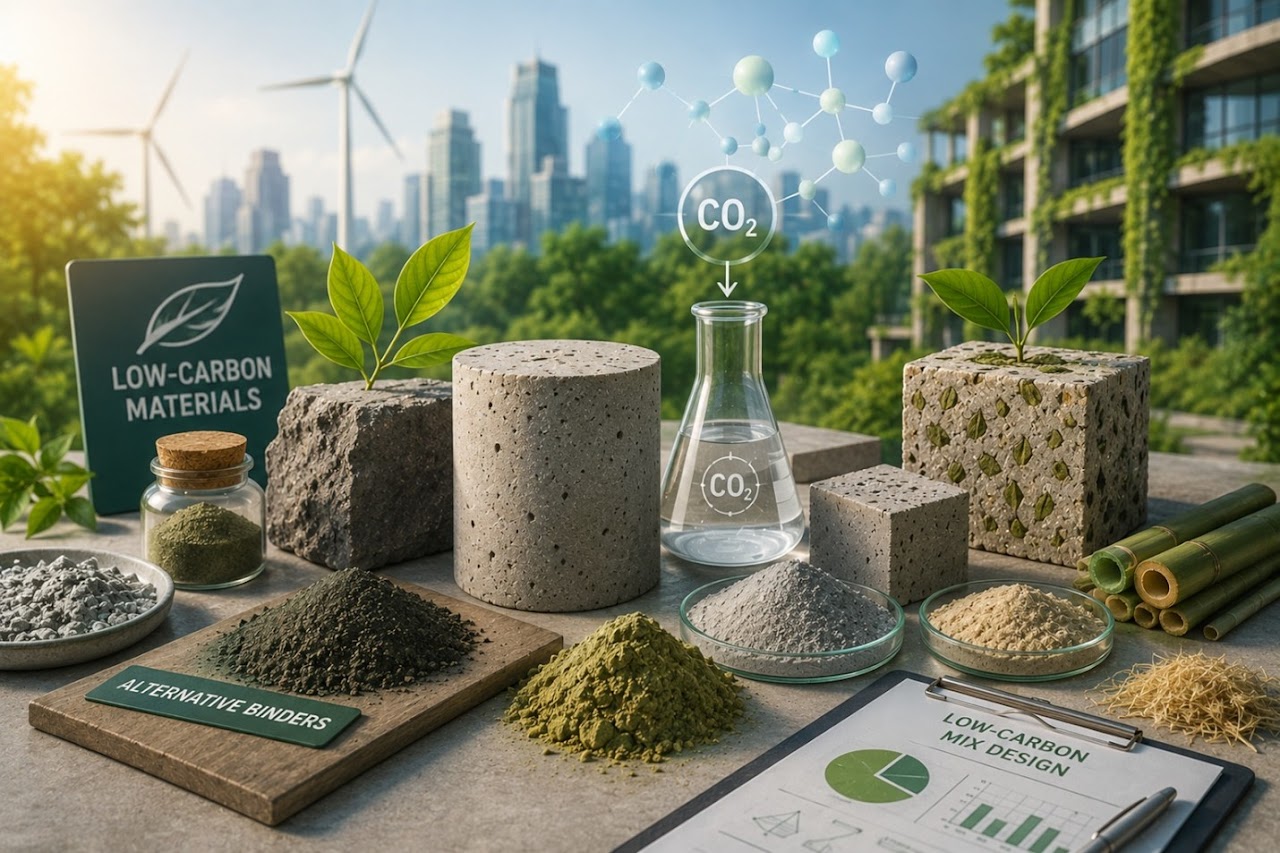
Sustainable and Low-Carbon Materials

  • Development of low-clinker and alternative binder systems to reduce dependence on conventional cement.
  • Application of CO₂ mineralization and carbonation technologies for carbon capture and material enhancement.
  • Use of bio-based and hybrid materials to improve sustainability and multifunctionality.
  • Optimization of low-carbon mix designs for reduced environmental impact and improved performance.
  • Development of ultra-low carbon cementitious systems and carbon-neutral construction materials.
  • Exploration of industrial by-products and supplementary cementitious materials for sustainable infrastructure applications.
  • Assessment of embodied carbon and environmental impact using lifecycle-based sustainability tools.
Sustainable and Low-Carbon Materials

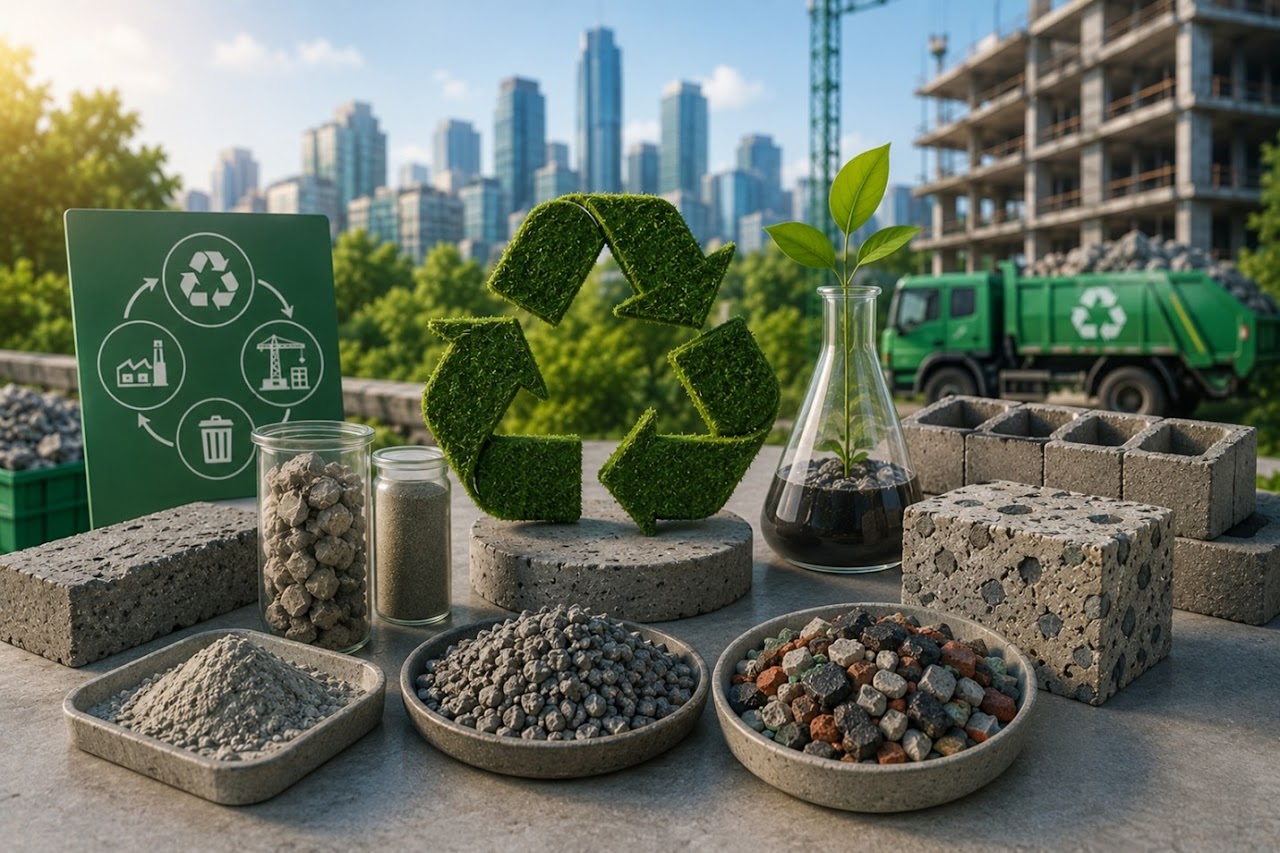
Circular and Recycled Materials

  • Valorization of industrial by-products and recycled resources in sustainable construction materials.
  • Integration of carbonation technologies to enhance recycled material performance and carbon storage.
  • Use of bio-based and hybrid recycled materials to support circular economy principles.
  • Design of low-carbon mixes using recycled aggregates and waste-derived materials.
  • Recycling and reuse of construction and demolition waste in new infrastructure materials.
  • Development of closed-loop material systems for circular construction practices.
  • Waste-to-resource strategies for sustainable infrastructure development.
Circular and Recycled Materials

Durability and Performance Engineering

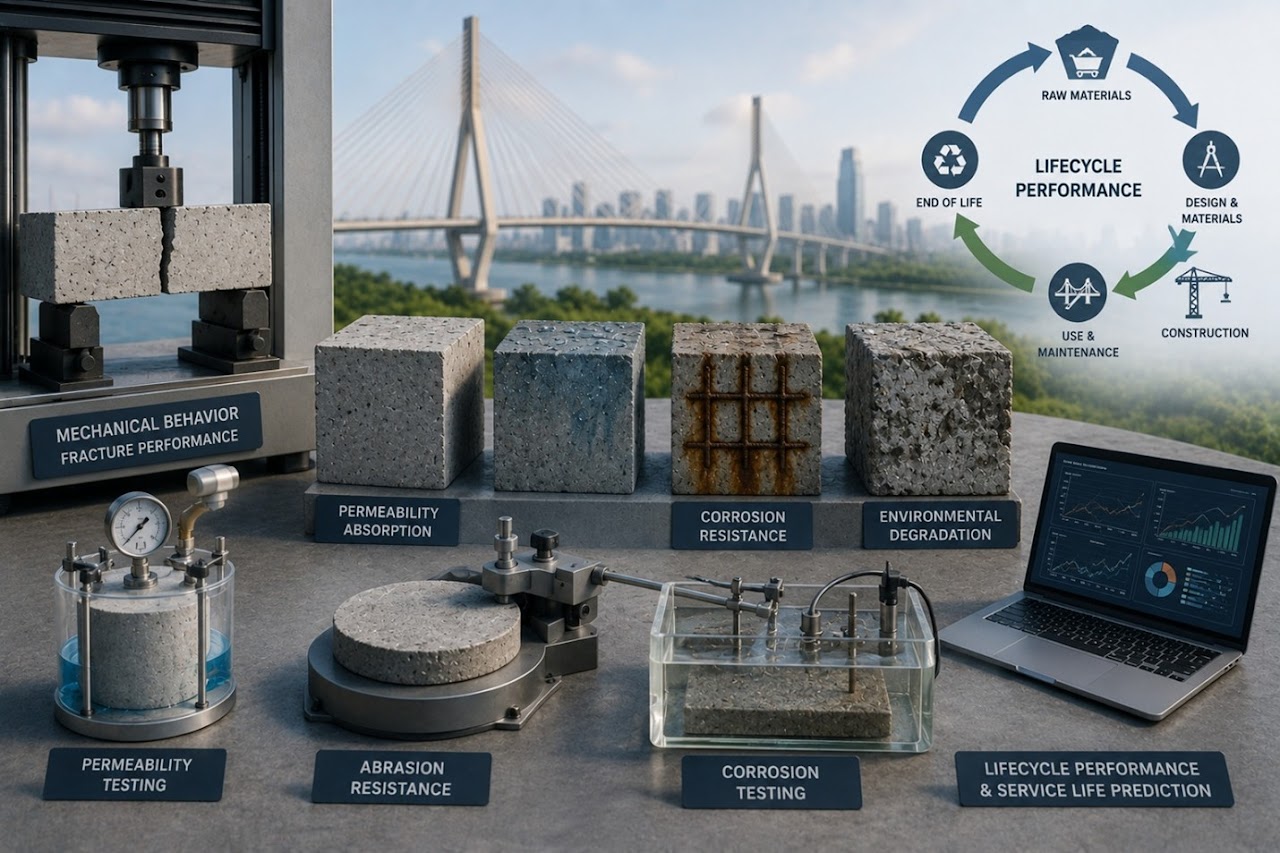
  • Evaluation of mechanical properties, fracture behavior, and structural reliability.
  • Investigation of transport properties such as permeability and moisture absorption.
  • Assessment of abrasion resistance, corrosion behavior, and environmental degradation.
  • Prediction of lifecycle performance and long-term service life of infrastructure materials.
  • Durability under extreme environmental conditions (marine, desert, freeze-thaw, and chemical exposure).
  • Structural resilience under dynamic, seismic, and impact loading conditions.
  • Reliability-based performance assessment and maintenance optimization.
Durability and Performance Engineering

Advanced Material Characterization

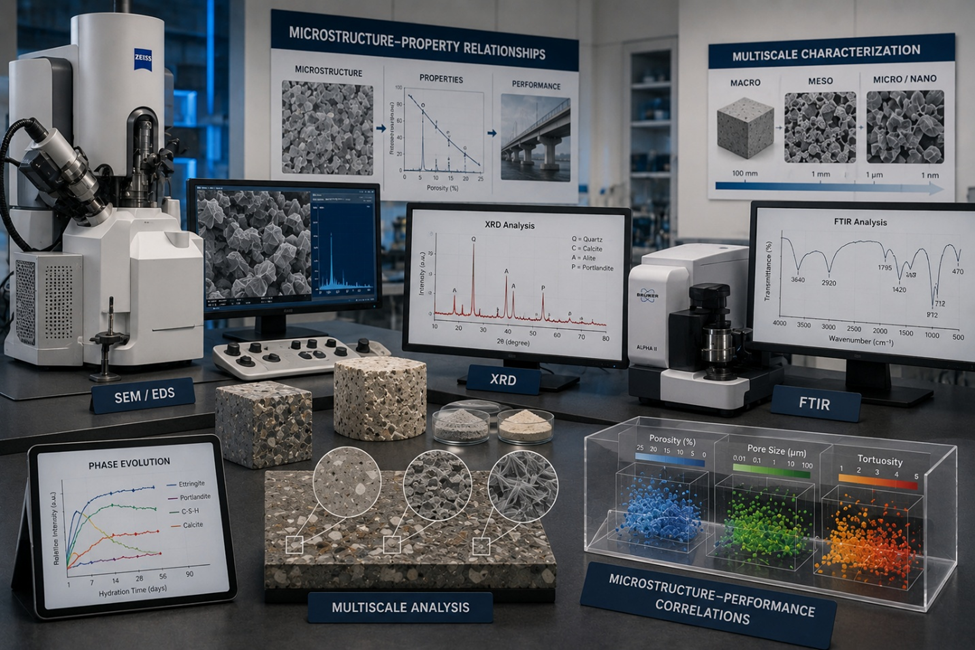
  • Use of advanced analytical techniques such as SEM, EDS, XRD, and FTIR for material analysis.
  • Study of phase evolution and mineralogical transformations.
  • Correlation between microstructure and engineering performance.
  • Multiscale characterization from nano- to macro-level behavior.
  • Advanced thermal and rheological characterization of construction materials.
  • In-situ and real-time monitoring of hydration and degradation mechanisms.
  • Integration of digital microscopy and automated image analysis techniques.
Advanced Material Characterization

Smart and Functional Materials

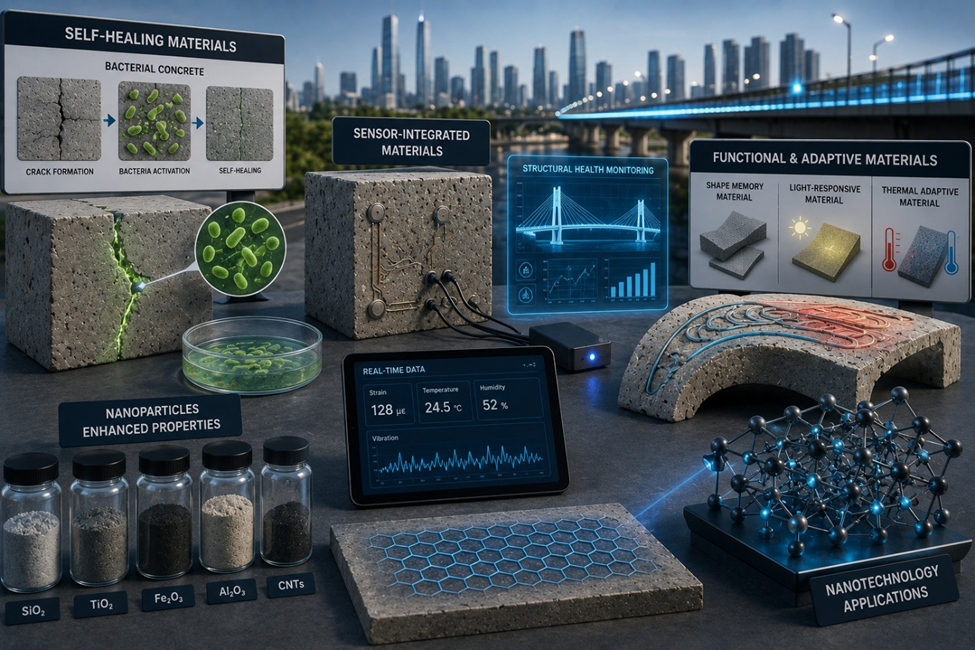
  • Development of self-healing materials for enhanced durability and reduced maintenance.
  • Integration of embedded sensors for real-time structural health monitoring.
  • Design of adaptive and responsive functional materials.
  • Application of nanotechnology to improve material performance and multifunctionality.
  • Development of energy-harvesting and energy-efficient construction materials.
  • Research on thermochromic, photocatalytic, and conductive materials for smart infrastructure.
  • Intelligent materials for autonomous response and adaptive structural performance.
Smart and Functional Materials

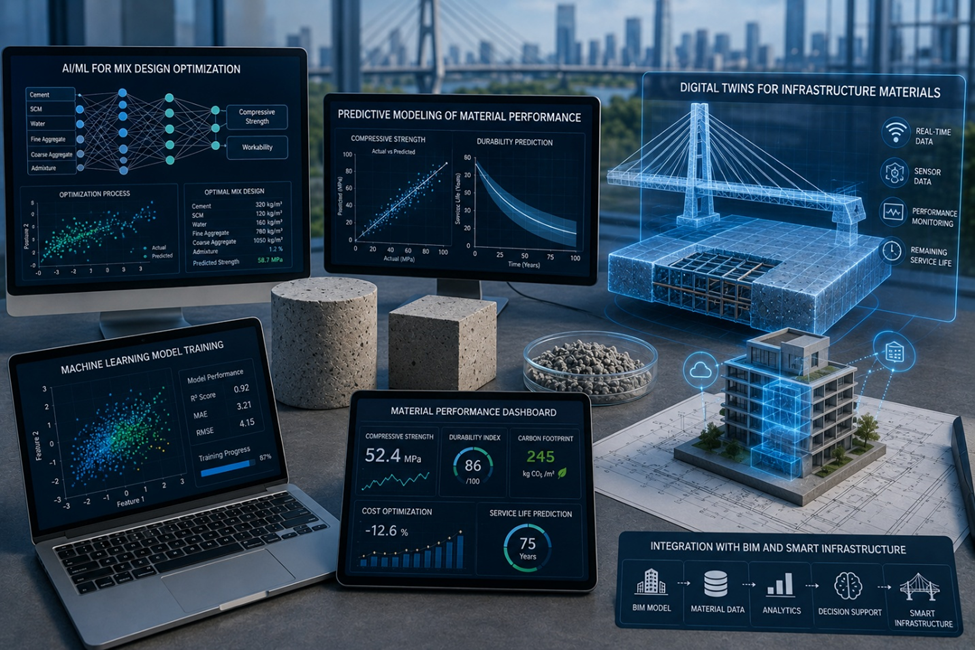
Digital Engineering and AI Applications

  • Application of AI and ML for intelligent mix design optimization.
  • Predictive modeling for long-term material performance assessment.
  • Use of digital twins for real-time monitoring and lifecycle management.
  • Integration with Building Information Modeling (BIM) and smart infrastructure systems.
  • Big data analytics for infrastructure material performance and decision-making.
  • AI-driven structural health monitoring and predictive maintenance systems.
  • Development of autonomous digital platforms for sustainable infrastructure management.
Digital Engineering and AI Applications

Get involved with SIM

We partner with industry, government, and academia to deliver real-world infrastructure and materials solutions.