AMRIC provides an integrated platform that combines engineering design capabilities with both conventional and advanced manufacturing technologies within a single facility. It serves as the central manufacturing hub for all PMU departments, enabling streamlined product development, prototyping, and production workflows.
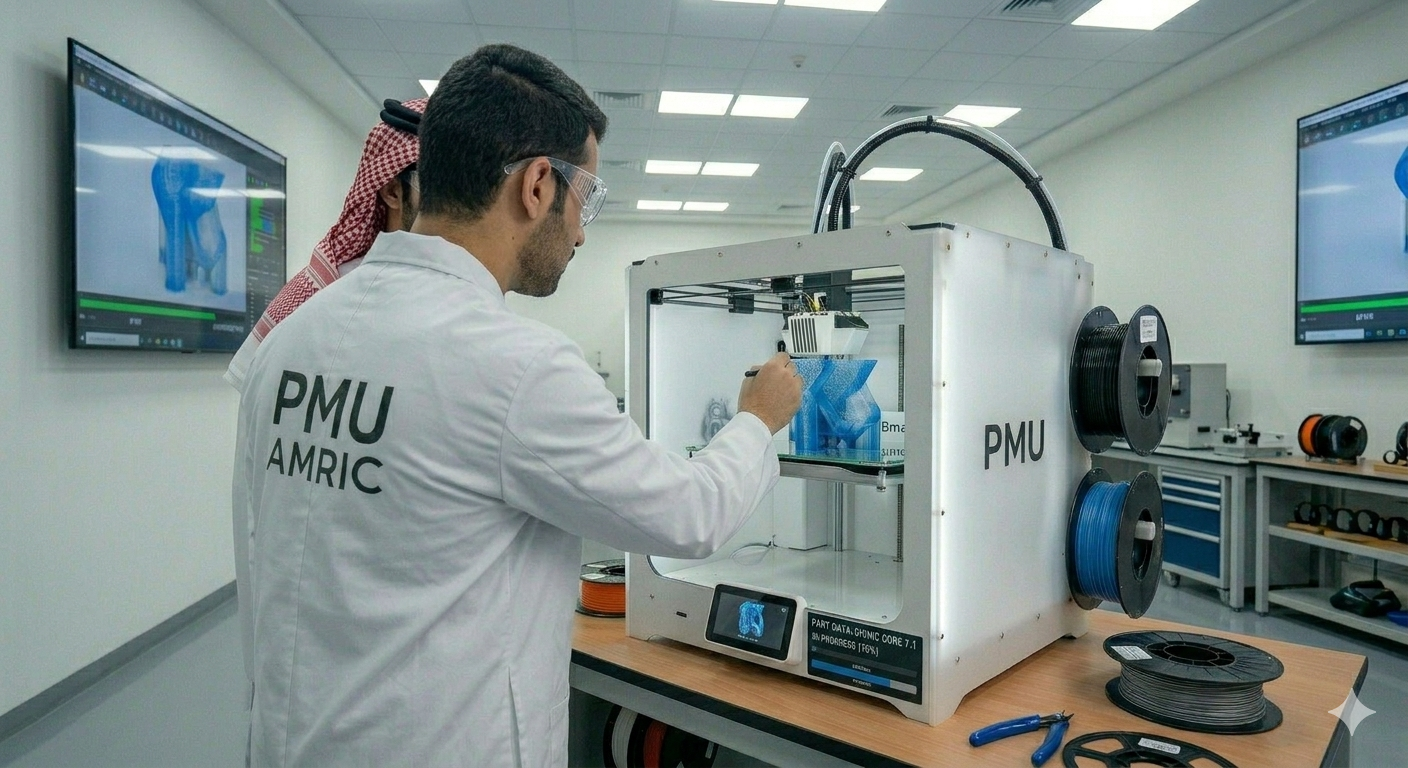
Sustainable and Advanced Materials Processing for AM
Sustainable and advanced materials processing in AM focuses on developing environmentally responsible and high-performance materials while optimizing fabrication techniques. It encompasses multi-material systems, lightweight and high-strength alloys, polymers, and composites designed for minimal waste and maximal efficiency. Advanced processing strategies integrate computational design, AI-driven optimization, and precise control of thermal and mechanical parameters to enhance material properties, structural performance, and manufacturability. This approach supports the creation of next-generation, sustainable components for aerospace, biomedical, automotive, and industrial applications.
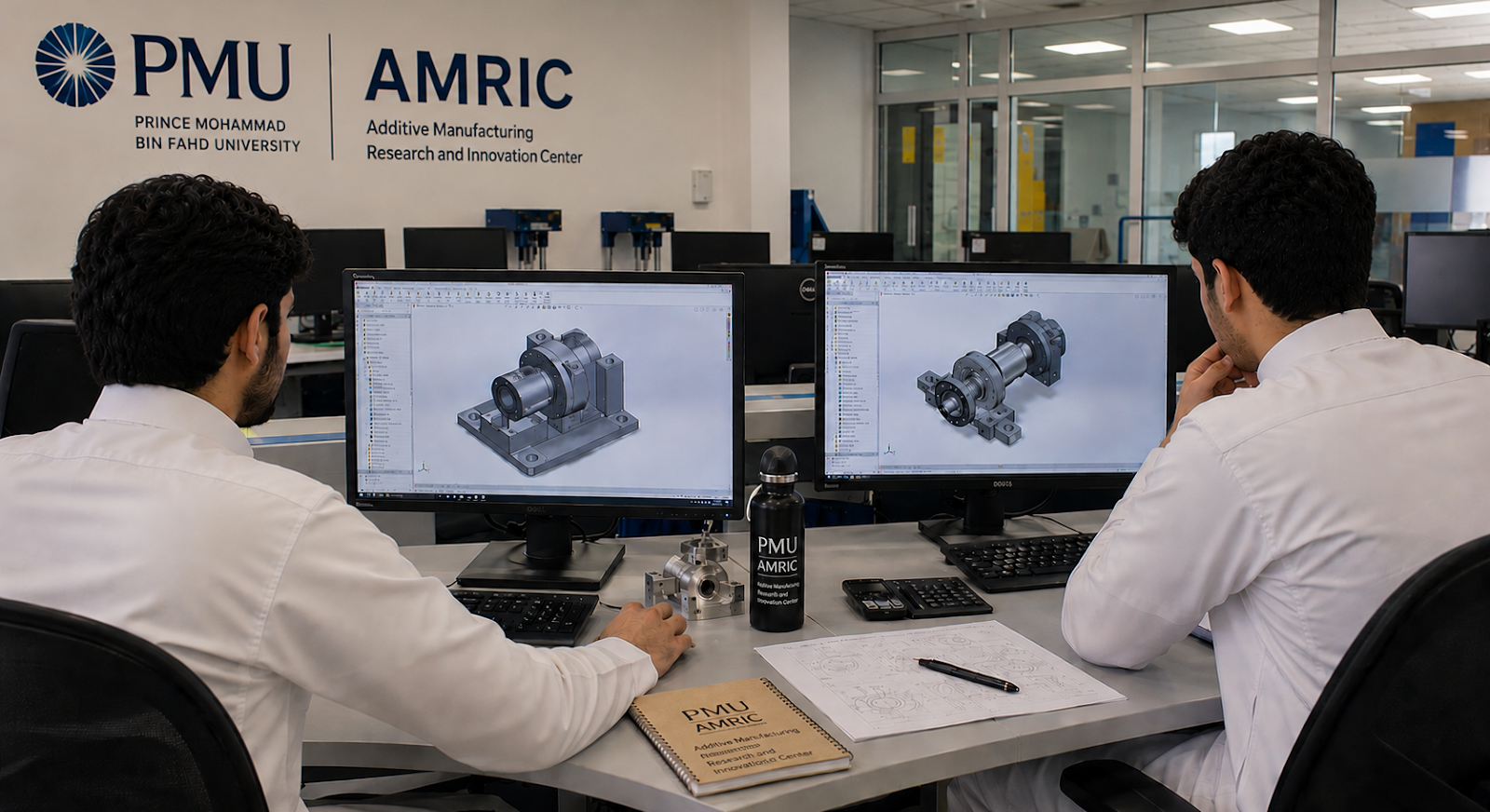
Design for Additive Manufacturing (DfAM)
Design for Additive Manufacturing (DfAM) focuses on creating components specifically optimized for AM technologies. It leverages complex geometries, lattice structures, topology optimization, and multi-material designs that are often impossible with traditional manufacturing. DfAM integrates computational tools, generative design, and AI-driven optimization to enhance performance, reduce weight, and improve material efficiency. By aligning design strategies with the capabilities of additive manufacturing, DfAM enables innovative, high-performance, and sustainable components across industries such as aerospace, biomedical, and automotive.
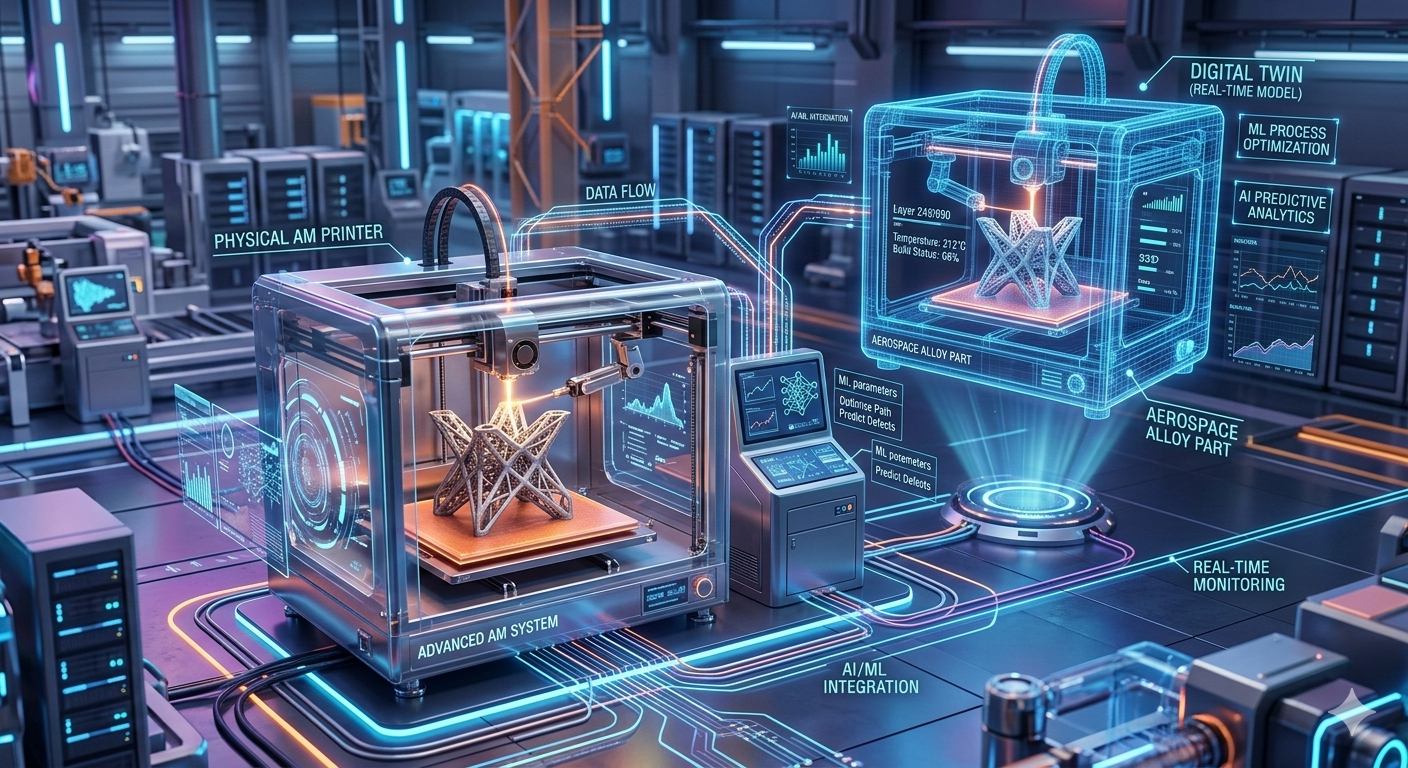
Digital Twin, Machine Learning (ML) and AI in AM
Digital Twin, Machine Learning (ML), and Artificial Intelligence (AI) in AM enable real-time monitoring, simulation, and optimization of AM processes. Digital twins provide virtual replicas of components and machines to predict performance, detect defects, and optimize manufacturing parameters. ML and AI algorithms analyze process data to improve material properties, enhance precision, and accelerate design iteration. Together, these technologies enable smarter, more efficient, and adaptive manufacturing, driving innovation, reducing waste, and supporting high-performance, next-generation components across industries.
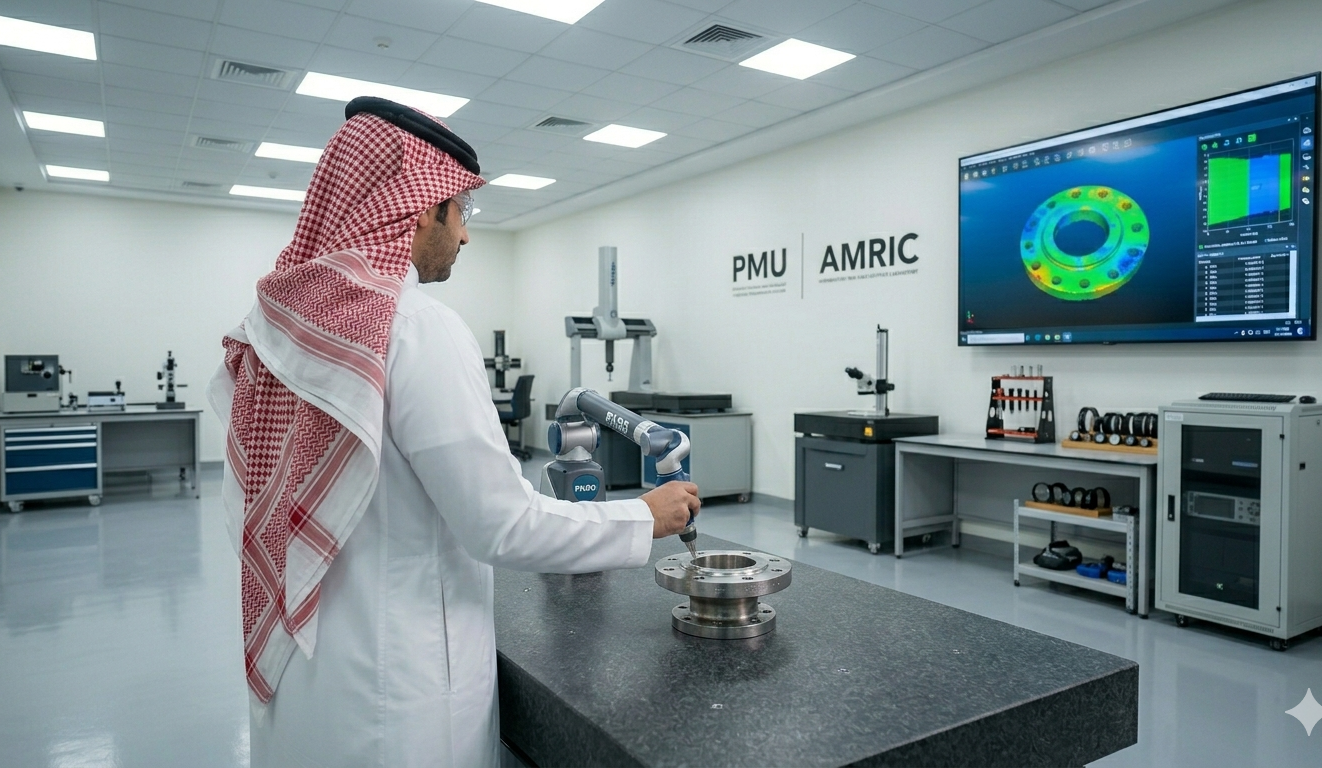
Metrology and Quality Control in AM
Metrology and quality control in AM ensure precision, reliability, and consistency of 3D-printed components. Advanced measurement techniques, including in-situ monitoring, 3D scanning, and non-destructive testing, are used to verify geometry, surface finish, and material properties. Integration of real-time feedback and process analytics helps detect defects early, optimize parameters, and maintain high standards of production. These practices are essential for industrial adoption of AM, enabling the production of high-performance, certified, and reproducible parts across aerospace, biomedical, automotive, and other critical sectors.
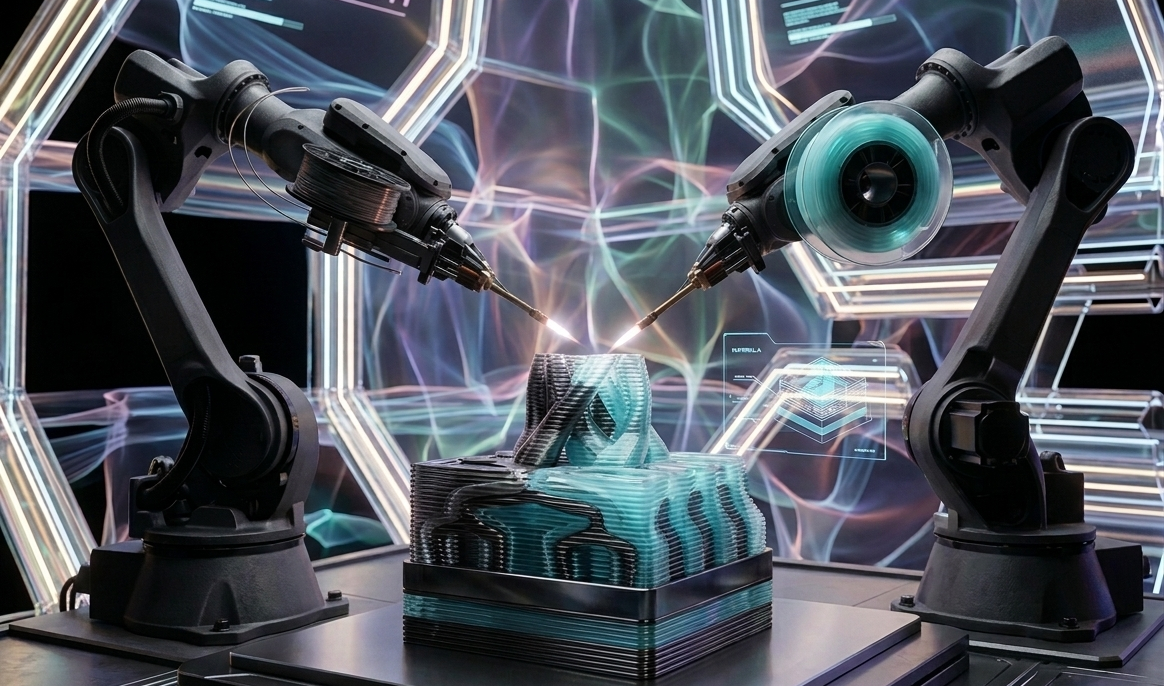
Multi-material and Functionally Graded Parts
Multi-material and functionally graded parts in AM enable the creation of components with spatially varying material properties tailored for specific performance requirements. These approaches allow seamless integration of multiple metals within a single part, optimizing strength, stiffness, thermal behavior, or other functional characteristics. Advanced AM techniques combined with computational design and simulation facilitate precise control over material distribution, reducing weight and improving efficiency. This capability supports innovative solutions in aerospace, biomedical implants, automotive, and energy applications, where customized performance and multifunctionality are critical.